Industrial LCDs outlast consumer displays by 5–10 years due to four critical engineering differences: wide-temperature ICs rated for -30°C to +85°C, OCA optical bonding that eliminates moisture ingress and delamination, automotive-grade backlight drivers designed for 24/7 continuous operation, and rigorous validation under IATF16949 and ISO13485 standards. Consumer panels, built for 1–3 year replacement cycles, fail rapidly when subjected to continuous industrial use.
Check: How Does Industrial LCD Longevity Mitigate EOL Risks for 10-Year Projects?
Why Is a 1-Year Consumer LCD a Disaster for Industrial Builds?
The hidden cost of premature failure: A $50 consumer LCD that fails after 18 months in an industrial HMI triggers $2,000+ in replacement labor, equipment downtime, and warranty claims. Total cost of ownership (TCO) often exceeds an industrial-grade display that lasts 5–7 years.
Real-world failure modes in industrial environments: Delamination from thermal cycling (consumer LCDs use air gaps that trap moisture), backlight driver burnout from continuous 24/7 operation, and touch sensor degradation from chemical exposure or frequent cleaning.
The supply chain trap: Consumer LCDs are redesigned annually; if your industrial product requires a specific panel for 5+ years, a consumer supply chain will leave you stranded with no compatible replacement. CDTech guarantees 3–5 year product lifecycle continuity for custom designs.
CDTech Expert Views
“One of our medical device clients originally sourced a consumer tablet display for a patient monitoring interface. Within 14 months, 12% of units had backlight failures. We replaced their design with a CDTech 10.1-inch IPS display featuring OCA bonding and wide-temp ICs. After 4 years in the field, field failure rate is 0.3%. The upfront cost was 2.5x higher, but TCO dropped by 60%.” — CDTech Senior Applications Engineer
How Do Industrial and Consumer LCDs Differ in Component Selection?
Temperature ratings tell the story: Consumer LCDs typically operate at 0°C to +50°C. Industrial-grade panels from CDTech are engineered for -20°C to +70°C (standard) or -30°C to +85°C (automotive/vehicle applications). This requires different IC-grade silicon, industrial-grade capacitors, and wider-trace PCBs.
Backlight lifespan specifications: Consumer panels advertise 15,000–20,000 hours (about 2 years of 24/7 use). Industrial LCDs target 50,000–100,000 hours—5 to 11+ years of continuous operation—using high-luminance LED arrays with robust thermal management and constant-current driver ICs.
Touch sensor survival: Consumer touch screens use PET film sensors that degrade under UV exposure and frequent cleaning with harsh chemicals. CDTech’s industrial touch displays employ glass-film-glass (GFG) or polyimide-based sensors with anti-glare and anti-fingerprint coatings, tested to 10 million+ touch cycles.
| Specification Parameter | Consumer LCD (Typical) | CDTech Industrial LCD |
|---|
| Operating Temperature | 0°C to +50°C | -20°C to +70°C (-30°C to +85°C automotive) |
| Backlight Lifespan (Continuous) | 15,000–20,000 hours | 50,000–100,000 hours |
| Brightness (Typical) | 250–350 cd/m² | 400–1,500 cd/m² (sunlight readable) |
| Touch Cycle Durability | 1–5 million touches | 10+ million touches |
| Product Lifecycle Support | 12–18 months | 3–5+ years guaranteed |
| Certifications | CE, RoHS | ISO9001, ISO14001, ISO13485, IATF16949 |
How Does Manufacturing Quality Impact LCD Display Reliability?
The “zero-defect” gap: Consumer LCD manufacturers operate at 95–98% yield; CDTech’s IATF16949-certified production line enforces a “zero-defect” quality policy with 100% electrical testing, 100% optical inspection, and burn-in validation for every panel. Defects that slip through consumer QA become field failures in industrial equipment.
Cleanroom manufacturing matters: CDTech’s 3,500m² thousand-level dust-free workshop ensures that particulate contamination—a leading cause of pixel defects and touch sensor shorts—is almost eliminated. Consumer panel factories rarely maintain better than class 10,000 cleanroom environments.
In-house OCA optical bonding as a reliability multiplier: By bonding the cover glass and touch sensor directly to the LCD module with optically clear adhesive, CDTech eliminates the air gap that traps moisture, dust, and condensation. This single process improvement increases display lifespan by 2–3x in humid or outdoor environments.
Why This Matters: A display manufacturer with ISO13485 (medical) and IATF16949 (automotive) certifications has proven quality systems that consumer-grade suppliers lack. CDTech holds all four: ISO9001, ISO14001, ISO13485, and IATF16949.
How Do Environmental Factors Shorten Consumer LCD Life in Industrial Settings?
Temperature extremes cause premature aging: Consumer LCD fluid degrades at 50°C+; automotive/industrial panels use wider-temperature liquid crystal mixtures that maintain switching speed and contrast from -30°C to +85°C. CDTech’s vehicle displays (e.g., 12.3-inch S123BWU11EP at 950 nits) use these formulations.
Check: Industrial LCD
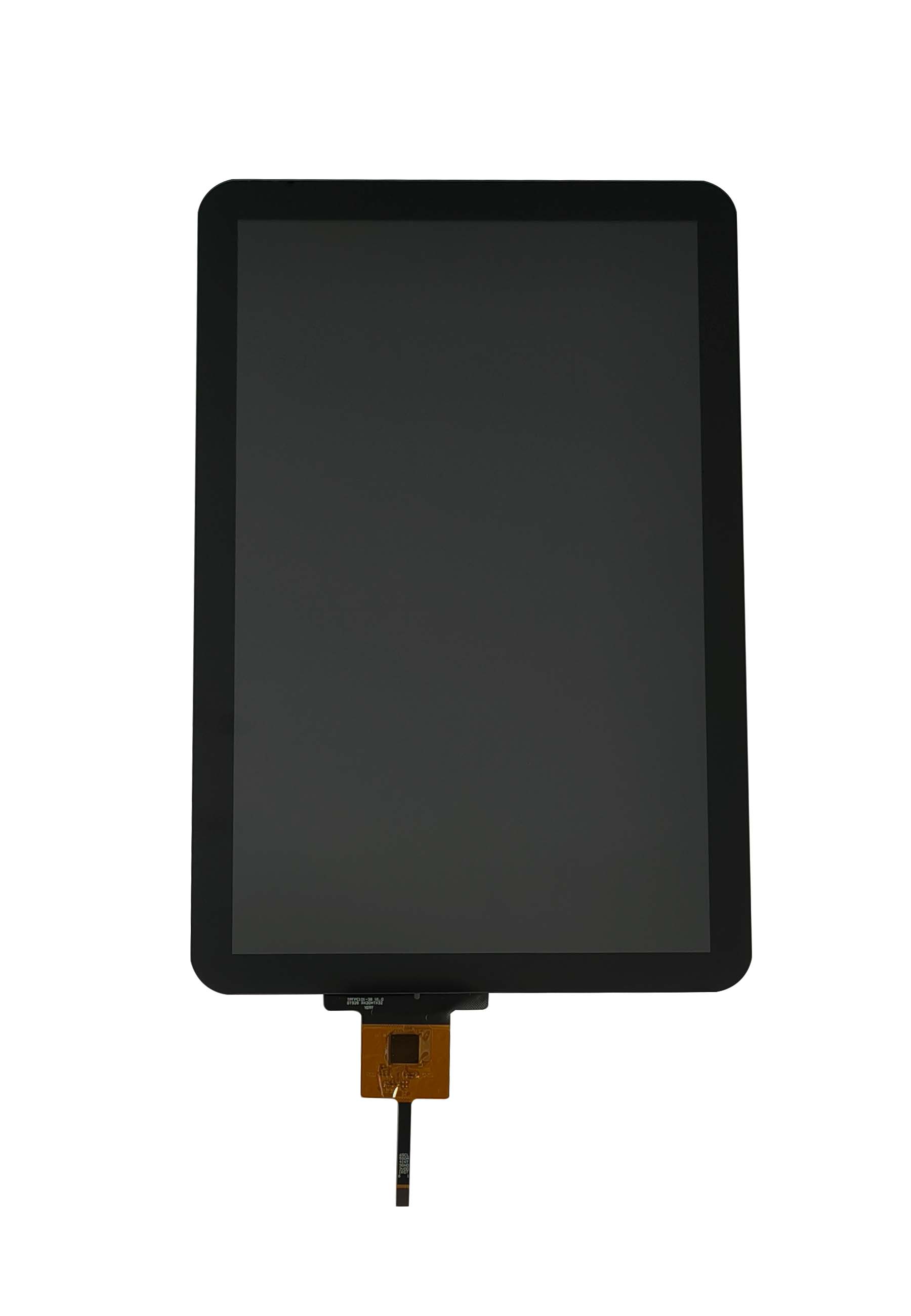
Humidity and condensation are silent killers: With an air gap construction, consumer LCDs allow moisture to condense between the cover glass and display, causing blooming, delamination, and eventual short circuits. OCA-bonded industrial panels from CDTech are sealed against moisture ingress.
Vibration and mechanical shock accelerate failure: Industrial equipment (forklifts, construction machinery, medical carts) experiences continuous vibration. Consumer panels aren’t designed for this—their edge connectors loosen, touch bonds delaminate, and polarizers crack. CDTech industrial panels use locking connectors, reinforced frames, and structural bonding.
“A smart home client approached us after their consumer-based 7-inch touch panels failed in outdoor gate intercom systems. The combination of direct sunlight (75°C+ internal temps) and monsoon humidity caused 40% failure rate within 8 months. We designed a custom 7-inch IPS display with IATF16949-grade wide-temp ICs, OCA bonding, and 800-nit backlight. Two years later: zero field failures.” — CDTech Product Manager
How Does Total Cost of Ownership (TCO) Compare Between Consumer and Industrial LCDs?
The 5-year TCO calculation reveals a dramatic difference: A consumer display costing $50 fails at 18 months → $50 replacement + $200 labor + $750 downtime = $1,000 per failure, 3 failures over 5 years = $3,000+ TCO. A CDTech industrial display costing $150 lasts 5–7 years → $150 + $0 failures = $150 TCO. The industrial option is 20x cheaper over the product lifecycle.
Warranty and liability costs multiply the gap: Medical device OEMs using consumer-grade displays face 4–8% warranty claims vs. 0.2–0.5% for industrial-grade panels. For a 1,000-unit medical monitor deployment, that’s $200,000+ in warranty losses avoided.
Field service and reputation damage are intangible costs: Every consumer display failure in an industrial installation erodes customer trust. OEMs that standardize on CDTech’s zero-defect industrial panels report 90%+ reduction in service calls related to display failures.
| Cost Category | Consumer LCD (5-Year Projection) | CDTech Industrial LCD (5-Year Projection) |
|---|
| Initial Unit Cost | $50 | $150 |
| Replacement Panels Required | 3 (at 18-month intervals) | 0 |
| Cumulative Panel Cost | $200 | $150 |
| Labor for Replacements | $600 (3 x $200) | $0 |
| Estimated Downtime Cost | $3,000 (3 x $1,000) | $0 |
| Warranty Claims (at 5% vs 0.3%) | $2,500 (per 100 units) | $150 (per 100 units) |
| Total 5-Year TCO | $6,300+ | $300 |
How Can You Verify That an Industrial LCD Supplier Delivers on Lifespan Claims?
Look for relevant certifications, not generic claims: ISO13485 indicates medical-grade quality management. IATF16949 proves automotive-grade lifecycle validation. CDTech holds both, plus ISO9001 and ISO14001—a certification suite no consumer display supplier can match.
Demand evidence of in-house manufacturing capabilities: A supplier that outsources module assembly and bonding has less control over quality. CDTech operates a 10,000m² factory with in-house automatic POL/LCD/CTP lamination equipment (upgraded 2024), thousand-level cleanrooms, and full incoming inspection lines.
Request lifecycle test data and customer references: CDTech can provide accelerated life test results (85°C/85% humidity, thermal shock -40°C to +85°C, mechanical shock 50G, vibration 10–500Hz) and references from OEMs in medical, automotive, and industrial control sectors who have used CDTech panels for 5+ years.
“When procurement managers visit our 7th-floor factory in Baoan, Shenzhen, they see our IATF16949 documentation on the wall, our thousand-level cleanroom in action, and our 100% burn-in testing station. We don’t just claim zero-defect—we prove it with every panel that ships to Europe, America, Japan, or the Middle East.” — CDTech Quality Manager
Conclusion
When you install a consumer LCD into an industrial build, you’re not saving money—you’re merely deferring a disaster. The $100 saved on the display panel becomes $1,000+ in field failures, replacement labor, lost production time, and damaged customer trust within 12–24 months.
Industrial LCDs from qualified manufacturers like CDTech (certified with ISO9001, ISO14001, ISO13485, and IATF16949) cost more upfront but deliver 5–10-year lifespans, zero-defect reliability, and guaranteed product lifecycle continuity. The difference is not in the glass—it’s in the engineering: wide-temperature ICs, OCA optical bonding, automotive-grade backlight drivers, and cleanroom manufacturing in a 10,000m² facility.
As you evaluate your next display supplier, ask yourself: Can you afford a 1-year consumer replacement cycle to compromise a medical device, industrial HMI, or automotive system that must operate reliably for 5+ years?
If the answer is no—contact CDTech. With 13+ years of industrial LCD manufacturing experience, a zero-defect quality policy, and custom display solutions designed for your specific application, CDTech is the lifecycle partner your project deserves.
Call to Action:
Phone: +86 0755-23032202
WhatsApp: +8613556818296
Email: sales@cdtech-lcd.com
Request a lifecycle consultation: www.cdtech-lcd.com
Download our free “Industrial LCD Lifecycle Buyer’s Guide” to understand how CDTech’s engineering choices directly extend product lifespan in your specific industry.
FAQs
How long do industrial LCD displays typically last compared to consumer displays?
Industrial LCDs designed for 24/7 operation typically achieve 50,000–100,000 hours of functional life (5–11+ years). Consumer displays are engineered for 15,000–25,000 hours of intermittent use (1–3 years). CDTech’s industrial panels, built with wide-temperature ICs and OCA bonding, demonstrate 0.3% failure rates at 4+ years in field deployments.
Can I use a consumer LCD in an industrial application if I add a protection cover?
Partial protection helps, but does not address the underlying failure mechanisms: consumer-grade ICs will still fail under temperature extremes, backlight drivers cannot sustain continuous operation, and the air-gap construction will still trap moisture. Adding a cover glass can even accelerate condensation issues. A true industrial-grade LCD with OCA bonding is the only reliable solution.
What role does OCA optical bonding play in LCD lifespan?
OCA (optically clear adhesive) bonding eliminates the air gap between the cover glass and LCD module. This prevents moisture ingress, reduces reflections, increases brightness by 15–20%, and mechanically strengthens the assembly against vibration and shock. CDTech’s in-house OCA bonding process, performed in a thousand-level cleanroom, is a primary reason industrial displays outlast consumer equivalents by 3–5x.
What certifications should I look for in an industrial LCD manufacturer?
For true industrial-grade reliability, seek manufacturers holding: ISO9001 (quality management), ISO14001 (environmental management), ISO13485 (medical device quality), and IATF16949 (automotive quality). CDTech holds all four certifications, validating its zero-defect quality policy across the most demanding industries.
Does CDTech provide custom display solutions with extended lifecycle guarantees?
Yes. CDTech has 13+ years of experience designing custom TFT LCD displays for industrial, medical, automotive, and smart home applications. Custom solutions include tailored brightness (400–1,500+ nits), wide-temperature ICs, OCA bonding, AG/AF coatings, and custom interfaces. CDTech guarantees 3–5 year product lifecycle continuity for all custom designs.