When selecting a TFT LCD for industrial equipment, the interface is just as important as screen size, resolution, brightness, and viewing angle. The interface determines how the display communicates with the main controller and has a direct impact on data transfer speed, PCB design, software compatibility, and overall system integration.
There is no single TFT LCD interface that works best for every application. A compact industrial instrument with a simple graphical interface may work well with SPI or an MCU interface, while a high-resolution HMI may require RGB, LVDS, or MIPI DSI. HDMI can also be useful when a display system needs to connect to an industrial PC or another standard video source.
Understanding the differences between these interfaces helps equipment manufacturers avoid compatibility problems and choose a display that fits the existing hardware architecture.
What Is a TFT LCD Interface?
A TFT LCD interface is the communication method between the LCD module and the host system. The host may be a microcontroller (MCU), microprocessor (MPU), FPGA, industrial computer, or another embedded controller.
Depending on the interface, the connection may transmit pixel data, clock signals, synchronization signals, commands, and other control information. The interface therefore affects how much image data can be transferred, how the display is refreshed, how many PCB traces are required, and how difficult the hardware and software integration will be.
The most common TFT LCD interfaces used in embedded and industrial applications include MCU, SPI, RGB, LVDS, MIPI DSI, and HDMI. They can broadly be divided into parallel interfaces and high-speed serial interfaces. Parallel interfaces such as MCU and RGB generally use more signal lines, while interfaces such as LVDS and MIPI DSI use differential serial transmission to achieve higher bandwidth with fewer physical connections.
Main Types of TFT LCD Interfaces
The different interfaces are designed for different system requirements, so comparing them only by speed can be misleading. A low-bandwidth interface may actually be the better choice for a small control display if it makes the system simpler and easier to maintain.
MCU interfaces are commonly used with microcontrollers and smaller TFT LCD modules. They are often based on 8080 or 6800 parallel communication and typically use a data bus together with signals such as chip select, read, write, reset, and command/data selection. The host writes display information to the display controller, which can then manage the refresh process. This makes MCU interfaces relatively straightforward for embedded applications and suitable for industrial instruments, compact control panels, handheld equipment, and small HMIs.
SPI, or Serial Peripheral Interface, uses a much smaller number of signal lines than a parallel MCU interface. A typical connection includes a clock, data, chip select, and command/data signal. Its simple wiring makes SPI attractive when the available MCU pins or PCB space are limited. The main trade-off is bandwidth. Because data is transferred serially, SPI is generally better suited to smaller displays or interfaces where the screen does not need to update large amounts of graphical content continuously.
RGB interfaces take a different approach by transferring pixel data directly from the host processor to the TFT LCD. Common formats include RGB565, RGB666, and RGB888, depending on the required color depth. RGB connections normally include red, green, and blue data lines along with timing signals such as pixel clock, HSYNC, VSYNC, and sometimes data enable. Because the host continuously supplies display data, RGB can provide predictable refresh performance and is widely used in industrial HMIs, automation equipment, medical instruments, and embedded control systems. The disadvantage is that a parallel RGB connection can require a relatively large number of signal lines and careful PCB routing.
For larger displays and systems that require higher data rates, LVDS and MIPI DSI are common choices. LVDS, or Low-Voltage Differential Signaling, sends display data through differential pairs, reducing the number of connections compared with a wide parallel RGB bus while maintaining high-speed transmission. It is widely used in industrial monitors, medical equipment, automation systems, vehicle displays, and embedded computers. MIPI DSI is another high-speed serial interface designed for modern processors and system-on-chip platforms. It can provide substantial bandwidth with relatively few signal lines, making it particularly attractive for high-resolution embedded displays where PCB space is limited. However, both interfaces require careful attention to signal configuration, processor compatibility, timing, and PCB design.
HDMI is somewhat different from the other interfaces because it is commonly used as a standardized video connection between a computing platform and a display system. It can be convenient when an industrial PC, embedded computer, or controller already provides an HDMI output. However, the TFT LCD panel itself may use LVDS, MIPI DSI, or another native interface, meaning an HDMI conversion board may be required. As a result, HDMI is often more relevant to complete display solutions than to the direct connection of a bare TFT LCD panel.
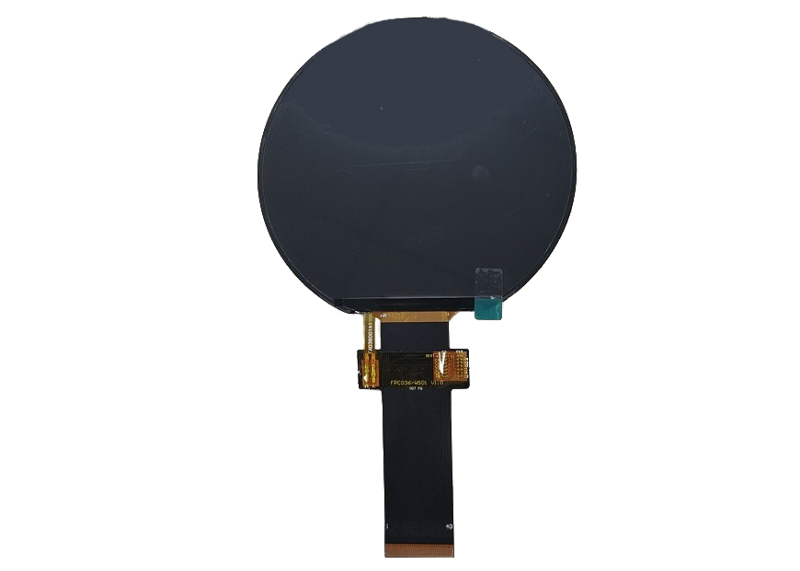
How Do TFT LCD Interfaces Differ?
The biggest differences between TFT LCD interfaces are bandwidth, physical connection, processor requirements, and integration complexity.
Bandwidth becomes increasingly important as resolution and refresh rate increase. A small 320 × 240 display with a simple static interface requires far less data than a high-resolution screen displaying continuously changing graphics. As resolution, color depth, and refresh rate increase, the amount of data that must be transferred to the display also increases.
A basic calculation can be used to estimate the pixel data requirement:
Pixel Data Rate = Horizontal Resolution × Vertical Resolution × Color Depth × Refresh Rate
Actual interface requirements will be higher because timing information and protocol overhead also need to be considered.
For example, SPI may be perfectly adequate for a compact industrial instrument that mainly displays numbers, status information, and simple menus. The same interface may become impractical for a larger TFT LCD showing complex graphics or rapidly changing data. In that situation, RGB, LVDS, or MIPI DSI may be more appropriate.
The physical design of the equipment also matters. Parallel interfaces such as RGB require more traces between the controller and display, while LVDS and MIPI DSI use differential pairs and fewer physical connections. However, fewer wires do not necessarily mean easier engineering. High-speed differential interfaces require careful impedance control, trace routing, grounding, connector selection, and signal integrity management.
Software support is another important consideration. The host processor must be able to communicate with the selected interface, and the system may require appropriate drivers, initialization commands, timing parameters, or configuration files. This is particularly important for MIPI DSI and other interfaces commonly used with more advanced processors.
| Interface | Main Characteristic | Bandwidth | Hardware Complexity | Typical Applications |
|---|
| MCU / 8080 | Parallel command-based communication | Low to medium | Relatively low | Small industrial displays, instruments |
| SPI | Simple serial communication | Low | Low | Compact embedded displays |
| RGB | Direct parallel pixel transmission | Medium to high | Moderate | Industrial HMIs, control systems |
| LVDS | High-speed differential transmission | High | Moderate to high | Medium and large TFT LCDs |
| MIPI DSI | High-speed serial display interface | High | Moderate to high | High-resolution embedded displays |
| HDMI | Standard digital video connection | High | Depends on system | Industrial PCs, video systems |
How to Choose the Right TFT LCD Interface
The best way to choose a TFT LCD interface is to start with the host system rather than the display itself. First determine what interface the existing MCU, MPU, FPGA, or industrial computer supports. Using an interface that is natively supported by the processor usually reduces hardware complexity and eliminates the need for additional bridge chips.
The next step is to consider the actual display requirements. Resolution, color depth, refresh rate, and graphical complexity all affect the required bandwidth. For a small display with a simple user interface, SPI or MCU communication may be sufficient. For a display that needs smooth graphics or frequent screen updates, RGB may provide a better balance. Higher-resolution displays and systems built around modern processors may benefit from MIPI DSI, while LVDS remains a practical choice for many medium- and large-size industrial displays.
PCB design and the physical distance between the controller and display should also be considered. A parallel RGB connection may require many traces and more PCB space, while high-speed serial interfaces use fewer signal lines but place greater demands on routing quality. Industrial equipment can also contain motors, relays, inverters, power supplies, and other sources of electrical noise, so signal integrity and EMI performance should not be overlooked.
Software compatibility should be checked at the same time. A display interface may appear electrically suitable but still require significant software development. Before selecting a TFT LCD, engineers should confirm the required driver support, initialization sequence, timing parameters, pixel format, voltage levels, connector configuration, and pin assignment.
Long-term availability is also important for industrial equipment. Industrial products may remain in production for many years, so the selected TFT LCD and its driver components should have a stable supply and a lifecycle that matches the equipment's expected service period.
Why Interface Compatibility Matters for Industrial TFT LCDs
Interface compatibility becomes particularly important when replacing an existing display or developing equipment around an established controller board. Two TFT LCDs can have the same size, resolution, and aspect ratio while using completely different interfaces and pin assignments. They are therefore not necessarily interchangeable.
For example, changing from an RGB TFT LCD to a MIPI DSI display may require more than replacing the LCD cable. The controller must support MIPI DSI, and the software may also need to be modified to initialize and drive the new display correctly. If the processor does not support the required interface, an additional bridge or conversion circuit may be necessary.
This is why industrial equipment manufacturers should consider the display and controller as one integrated system. Selecting the interface at the beginning of the product development process makes it easier to coordinate the processor, PCB, display driver, connector, software, and mechanical structure.
For replacement projects, manufacturers should provide the TFT LCD supplier with the existing interface specification, connector information, resolution, timing requirements, and mechanical dimensions. This allows the supplier to determine whether a standard display can be used or whether a customized TFT LCD module would be more appropriate.
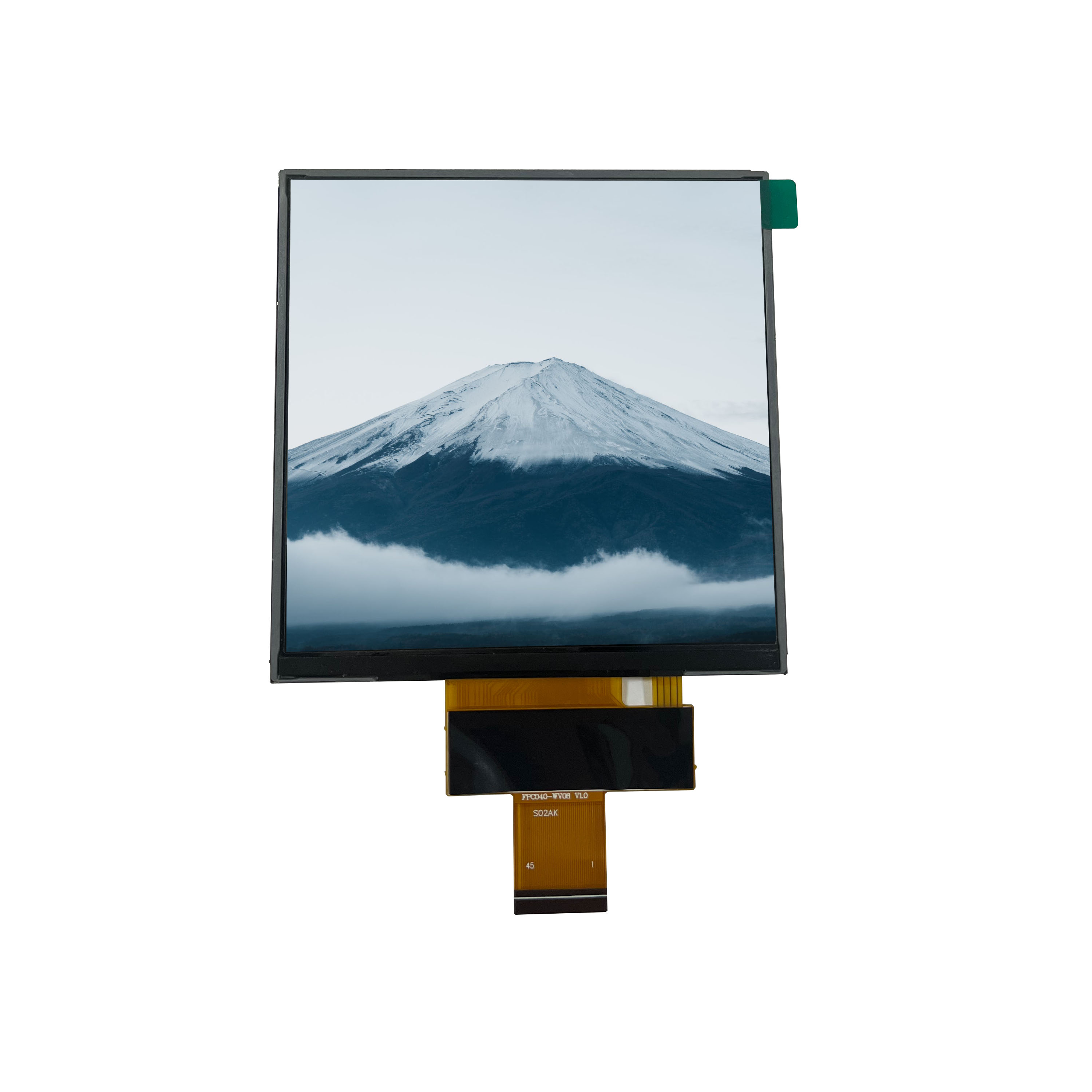
Custom TFT LCD Interfaces for Industrial Equipment
Standard TFT LCD modules are suitable for many applications, but industrial equipment often has requirements that do not fit a standard configuration. The controller may use a specific interface, the installation space may be restricted, or the display may need to operate under unusual temperature, brightness, or mechanical conditions.
A custom TFT LCD module can be developed around these requirements rather than forcing the equipment design to adapt to an unsuitable standard display. Interface customization can cover the communication method, connector and pinout, display driver, touch panel, backlight, and other parts of the module.
For industrial applications, customization may also involve high brightness for outdoor or strong-light environments, wide-temperature operation, optical bonding, special aspect ratios, anti-glare treatment, or mechanical modifications. Combining these requirements with the correct interface helps create a display solution that is easier to integrate and more reliable over the equipment's service life.
Final Thoughts
The different types of TFT LCD interfaces each serve a particular purpose. MCU and SPI interfaces are well suited to smaller displays and relatively simple embedded applications. RGB provides direct pixel transmission and remains widely used in industrial control systems. LVDS offers high-speed differential communication for many medium- and large-size displays, while MIPI DSI provides high bandwidth with fewer physical connections and works particularly well with modern embedded processors. HDMI is useful when a TFT LCD solution needs to connect to a standard video source such as an industrial PC.
The right interface is ultimately determined by the entire system rather than by the LCD alone. Processor compatibility, resolution, refresh rate, bandwidth, PCB layout, software support, connector configuration, and long-term availability should all be considered before the display is selected.
For industrial equipment manufacturers, getting the interface right at the beginning can prevent unnecessary hardware redesign and simplify long-term product maintenance. When standard modules do not meet the requirements, a custom TFT LCD solution can provide greater flexibility by matching the display interface and other specifications to the equipment's actual architecture.
FAQ
What are the most common TFT LCD interfaces?
The most common TFT LCD interfaces include MCU, SPI, RGB, LVDS, MIPI DSI, and HDMI. The appropriate interface depends on the display size, resolution, host processor, bandwidth requirements, and system architecture.
Which TFT LCD interface is suitable for high-resolution displays?
MIPI DSI and LVDS are commonly used for high-resolution TFT LCDs because they can provide high data bandwidth without requiring a large parallel data bus. The final choice depends on processor compatibility and system design.
Is SPI suitable for industrial TFT LCD applications?
Yes. SPI is suitable for many small industrial displays, particularly when the screen shows relatively simple information and low pin count is important. It may not be suitable for large displays or applications requiring frequent high-resolution screen updates.
Can two TFT LCDs with the same resolution use different interfaces?
Yes. Two displays with the same resolution can use completely different interfaces, timing parameters, connectors, and pin assignments. Resolution alone is not enough to determine whether two TFT LCD modules are interchangeable.


