Industrial equipment has become more intelligent, but that intelligence is only useful when operators can clearly understand and control what the machine is doing. A modern control system may collect hundreds of parameters, monitor multiple sensors, and automatically adjust operating conditions, yet the operator still needs a practical interface for viewing information, entering commands, responding to alarms, and checking equipment status.
This is where TFT LCD displays have become an important part of industrial equipment design. Compared with traditional indicator lights, segmented displays, and basic monochrome screens, TFT LCD technology can present much more information in a compact and intuitive interface. Color graphics, touch interaction, real-time data visualization, and customizable layouts allow manufacturers to build interfaces around the actual workflow of the equipment rather than forcing operators to interpret a collection of disconnected indicators.
For industrial applications, however, the value of a TFT LCD display is not simply its image quality. Reliability, readability, operating environment, interface compatibility, viewing angle, temperature performance, and long-term availability all influence whether a display is suitable for a machine.
From Basic Indicators to Visual Machine Interfaces
Traditional industrial control panels often rely on combinations of switches, buttons, LEDs, gauges, and simple numeric displays. These components remain useful for certain applications, but they become increasingly difficult to manage as equipment functions become more complex.
A machine with only a few operating parameters may not need an advanced display. A sophisticated piece of industrial equipment is different. Operators may need to monitor temperature, pressure, speed, voltage, production counts, error codes, maintenance status, and other information at the same time.
A TFT LCD display provides a more flexible way to organize this information.
Instead of assigning a separate physical indicator to every parameter, manufacturers can use a graphical interface to group related information on different screens. A main dashboard can show overall machine status, while additional pages provide detailed settings, maintenance information, alarm history, or diagnostic data.
This approach also makes the interface easier to adapt. When the control system changes, software can often modify the information shown on the screen without requiring the entire physical control panel to be redesigned.
Clearer Visualization of Real-Time Operating Data
One of the biggest advantages of TFT LCD technology is its ability to display information graphically.
Industrial operators do not always need more data. They need to understand important data quickly.
A numerical value such as "78.5°C" tells an operator the current temperature, but a graphical trend can show whether that temperature is stable, increasing, or approaching a predefined limit. Similarly, a production machine can use progress indicators, charts, status icons, and color-coded warnings to make operating conditions easier to understand at a glance.
A properly designed TFT LCD interface can display:
This visual approach can reduce the amount of interpretation required from the operator. Instead of reading several individual instruments and mentally combining the information, the operator can see the relationship between important parameters directly on the display.
Better Support for Touchscreen Operation
TFT LCD displays are also commonly integrated with touch panels, creating a more flexible human-machine interface (HMI).
A physical button has a fixed function. A touchscreen button can change depending on the current operating mode, user permissions, or machine status. This gives equipment manufacturers much greater freedom when designing control interfaces.
For example, the same screen area might be used for machine startup controls during normal operation and become a maintenance control during service mode. Settings can be hidden from general operators while remaining accessible to authorized technicians.
Touch interaction can also simplify equipment layouts. Instead of filling a control cabinet with dozens of physical buttons, manufacturers can consolidate many functions into a single display interface.
That does not mean every industrial application should replace physical controls with a touchscreen. Emergency stops, critical mechanical controls, and functions that must remain accessible under difficult conditions may still require dedicated hardware. The most effective industrial interface often combines a TFT LCD touchscreen with physical buttons or switches where appropriate.
Improved Operator Efficiency
Industrial interfaces are designed for people who need to make decisions quickly. A well-designed TFT LCD interface can reduce unnecessary steps and make frequently used functions easier to access.
Consider a machine with multiple operating modes. With a conventional panel, the operator may need to check a manual or remember which combination of switches corresponds to each mode. A graphical interface can instead present clearly labeled operating modes and guide the operator through the required settings.
The display can also provide immediate feedback after an action. When a parameter is changed, the operator can see the updated value, machine status, and any resulting warnings on the same interface.
This feedback loop is particularly valuable in equipment where incorrect settings can affect production quality, machine performance, or maintenance requirements.
Easier Alarm and Fault Management
Fault handling is another area where TFT LCD displays can make a significant difference.
A basic warning light may tell an operator that something is wrong, but it rarely explains what happened. An industrial TFT LCD interface can provide much more useful information.
For example, instead of displaying only a red warning indicator, the interface could show:
Motor Overtemperature
Current Temperature: 92°C
Recommended Action: Check cooling system
This type of information gives the operator a starting point for troubleshooting.
More advanced systems can also maintain alarm histories, allowing technicians to review previous events and identify recurring problems. If a machine repeatedly reports the same fault, maintenance personnel can use the recorded information to investigate the underlying cause rather than treating each incident as an isolated event.
The display therefore becomes more than an output device. It becomes part of the machine's diagnostic system.
Greater Flexibility for Different Equipment Designs
Industrial machinery varies considerably in size, function, and operating environment. A display that works well for a compact control unit may not be appropriate for a large production machine.
TFT LCD technology is available in many screen sizes, resolutions, aspect ratios, and interface configurations. This allows manufacturers to select a display based on the available installation space and information requirements.
For example, a compact control module may require a small TFT LCD with a simple interface, while a larger industrial control panel may benefit from a 7-inch, 10.1-inch, or larger display.
Resolution is also important. A higher-resolution panel can accommodate more detailed graphics and smaller text, although the highest possible resolution is not automatically the best choice. The display should provide enough detail for the intended viewing distance and interface design without creating unnecessarily high system costs or processing requirements.
Better Visibility in Industrial Environments
Industrial equipment is rarely operated under perfectly controlled office lighting. Displays may be exposed to strong overhead lighting, changing ambient conditions, reflections, dust, vibration, or unusual viewing angles.
For this reason, display readability is often more important than simply having a high-resolution image.
Brightness, contrast, viewing angle, and optical performance all affect whether information can be read easily. IPS TFT LCD technology, for example, is often selected for applications where wide viewing angles and consistent image quality are important.
For equipment installed near windows or under strong lighting, higher-brightness or sunlight-readable displays may be more appropriate. Anti-glare treatments, optical bonding, and other display enhancements can also improve readability depending on the equipment's environment.
The right specification should therefore be determined by the actual operating conditions rather than by a general preference for a particular display type.
Supporting Industrial HMI and Control Systems
A TFT LCD display does not work independently. It is normally part of a larger control architecture that may include a PLC, microcontroller, industrial computer, sensors, communication interfaces, and HMI software.
The display provides the visual interface between this control system and the operator.
For example, sensors may collect temperature and pressure data, a PLC may process the information and control machine operation, and the TFT LCD HMI may present the results to the operator. When the operator changes a parameter through the touchscreen, that command can be transmitted back to the controller.
This makes interface compatibility an important consideration when selecting a TFT LCD module.
Depending on the system architecture, manufacturers may need to consider interfaces such as RGB, LVDS, MIPI, SPI, or other communication and display interfaces. The correct choice depends on the controller, processing platform, resolution, refresh requirements, and overall hardware design.
More Efficient Use of Control Panel Space
Space is often limited in industrial equipment, especially in compact machines and embedded control systems.
A traditional control panel may require separate switches, meters, indicators, and labels for different functions. A TFT LCD can combine many of these functions into one programmable interface.
This can reduce the physical complexity of the control panel while making it easier to add functions in the future.
For equipment manufacturers, this flexibility can also simplify product development. A common display platform may be adapted for different machine models by changing the interface software and configuration rather than redesigning the entire physical control panel.
This is particularly useful for manufacturers producing equipment with several variants or customized configurations.
Supporting Remote Monitoring and Connected Equipment
Modern industrial equipment increasingly incorporates networking and remote monitoring capabilities. TFT LCD interfaces can complement these systems by providing local access to information while the same data is transmitted to higher-level monitoring platforms.
An operator standing next to a machine may see its current operating status on the local display, while the same information can be sent to a supervisory system for centralized monitoring.
This combination of local and remote visibility is useful for factories with multiple machines or distributed production lines.
The TFT LCD itself does not create connectivity, but it provides the local visualization layer that makes connected industrial systems more practical for operators and technicians.
Reliability Matters More Than Appearance
A display can look excellent in a product demonstration and still be unsuitable for industrial equipment.
Industrial applications often require long operating hours and consistent performance over years. Equipment may be exposed to temperature fluctuations, vibration, humidity, dust, electrical interference, or continuous operation.
Display selection therefore needs to consider factors such as:
Operating temperature range
Storage temperature
Brightness stability
Backlight lifetime
Vibration resistance
Shock resistance
Touch panel durability
Connector reliability
Long-term component availability
Environmental protection requirements
The exact requirements depend on the equipment. A display used inside a protected control cabinet has very different requirements from one mounted directly on outdoor machinery.
Long-term product availability is another important issue for industrial manufacturers. Consumer electronics can have short product cycles, but industrial equipment may remain in production for many years. A display supplier that can support stable specifications and long-term supply can help reduce redesign risks.
Choosing the Right TFT LCD for Industrial Equipment
Selecting a TFT LCD should begin with the machine's requirements rather than the display specification sheet alone.
Screen size is an obvious consideration, but it is only one part of the decision. Manufacturers should also evaluate the viewing distance, available installation space, required resolution, brightness, viewing angle, touch technology, operating temperature, interface, and expected service life.
The user interface itself should also influence the selection. If the screen needs to show detailed graphs and multiple control elements, a larger resolution may be beneficial. If the display is primarily used for simple status information, an extremely high-resolution panel may offer little practical advantage.
Environmental conditions should be evaluated early in the design process. A display installed inside an enclosed industrial cabinet may require different specifications from one exposed to sunlight or wide temperature variations.
Touchscreen requirements deserve particular attention as well. Resistive touch technology can be useful in certain industrial environments where operators may wear gloves or where durability is important. Capacitive touch can provide a more familiar multi-touch experience, but its suitability depends on the application and operating conditions.
Customization Can Make the Difference
Off-the-shelf TFT LCD modules are suitable for many industrial products, but some machines require a customized display solution.
Customization may involve screen dimensions, mounting structures, connector locations, touch panels, protective glass, brightness levels, interface configurations, or other mechanical and optical requirements.
For equipment manufacturers, the advantage of customization is not simply creating a different-looking screen. A properly customized display can fit the physical and functional requirements of the machine more efficiently.
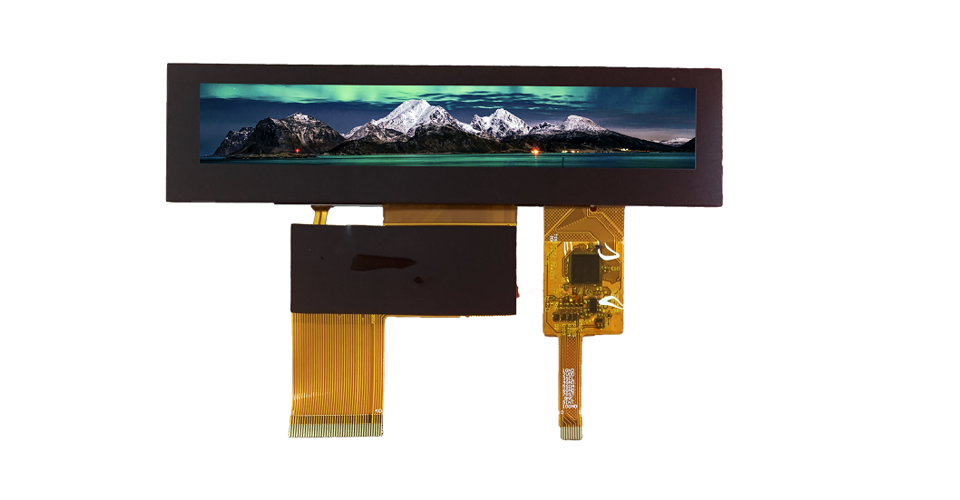
For example, an unusual control panel may require a specific aspect ratio to maximize usable screen space. A machine intended for outdoor operation may need enhanced brightness and optical treatment. Equipment operated with gloves may require a touch solution designed around that interaction method.
Working with a display manufacturer early in the product development process can help identify these requirements before they become expensive hardware changes.
TFT LCD Displays Are Becoming Part of the Machine, Not Just the Panel
The role of the industrial display has changed significantly. It is no longer simply a component that shows numbers and warning messages.
A modern TFT LCD interface can connect machine data, operator controls, alarms, diagnostics, and maintenance information in a single visual environment. When the interface is designed properly, operators can understand equipment conditions faster, technicians can troubleshoot problems more effectively, and manufacturers can build more flexible control systems.
The most important point is that better industrial interfaces do not come from choosing the most advanced display specification available. They come from matching the display technology to the machine, the environment, and the people who will use it.
For industrial equipment manufacturers, TFT LCD technology provides the flexibility to create clearer, more responsive, and more capable interfaces while leaving room for future software and system improvements. As machinery continues to become more automated and connected, the display will remain an important link between increasingly complex control systems and the operators responsible for keeping them running.
Frequently Asked Questions
What are the main benefits of TFT LCD displays in industrial equipment?
TFT LCD displays provide clear graphical information, flexible interface layouts, touchscreen support, real-time data visualization, and better alarm and diagnostic presentation. They can also combine multiple control functions into a single interface.
Are TFT LCD displays suitable for harsh industrial environments?
Yes, but the display must be selected according to the actual environment. Operating temperature, brightness, vibration, humidity, dust, touch durability, and other requirements should be evaluated before choosing a TFT LCD module.
How do I choose the right TFT LCD for an industrial application?
Consider screen size, resolution, brightness, viewing angle, operating temperature, touch requirements, interface compatibility, installation dimensions, and expected service life. The display should be selected based on the complete equipment design rather than one specification alone.
Can TFT LCD displays be customized for industrial equipment?
Yes. Depending on the manufacturer, customization can include display size, resolution, brightness, touch panel, connector configuration, mechanical dimensions, protective glass, and other requirements. Customization is particularly useful when standard modules do not fit the machine's mechanical or functional requirements.