News
Site Editor
 Site
https://cdtech-lcd.usa72.wondercdn.com/uploads/image/5faca15e24cff.png
Site
https://cdtech-lcd.usa72.wondercdn.com/uploads/image/5faca15e24cff.png
How Does OCA Optical Bonding Improve Glare Resistance in 2026 Autonomous Cockpits?
Views: 398
Author: Site Editor
Publish Time: 2026-05-07
Origin: Site
OCA (Optical Clear Adhesive) optical bonding laminates the touch screen and LCD panel without an air gap using a solid adhesive film. In 2026 autonomous cockpits, this eliminates internal reflections, reducing glare by up to 70%. It also bonds layers into a single rigid unit, dramatically improving sunlight readability and touch screen integrity under constant vehicle vibration, unlike traditional air‑gap constructions.
Check: Vehicle LCD Display | Automotive LCD Display Manufacturers - CDTECH LCD
What Is OCA Optical Bonding and How Is It Different from LOCA for Autonomous Cockpits?
OCA (Optical Clear Adhesive) is a solid adhesive film used to laminate the touch panel and LCD without an air gap. LOCA (Liquid Optically Clear Adhesive) is a liquid that is dispensed and UV‑cured. For autonomous cockpits, OCA is often preferred because it delivers consistent thickness, no outgassing, and superior vibration damping. CDTech’s in‑house OCA bonding line, operational since 2020, ensures rigorous quality control.
| Parameter | OCA (Film) | LOCA (Liquid) | Air Gap |
|---|
| Bond uniformity | ±0.05 mm | ±0.15 mm (varies with dispense) | N/A |
| Dust sensitivity | Low (solid film) | High (traps particles) | N/A |
| Impact on glare | Eliminates air gap, reduces glare ~70% | Reduces glare, but may haze if cured unevenly | Multiple reflections cause severe glare |
| Vibration resistance | Excellent (monolithic structure) | Good, but can crack under extreme vibration | Poor (layers flex separately) |
| Repairability | Not repairable | Partially repairable | Easily repairable |
| Cost | Higher | Moderate | Low |
Why Does Glare Become a Critical Safety Issue in 2026 Autonomous Cockpits?
Autonomous cockpits shift the driver’s role from active control to monitoring and entertainment. Displays must remain readable under high ambient light without causing distraction or eye strain. By 2026, next‑generation ADAS regulations will demand even higher brightness (1,200+ nits) and minimal glare. Air‑gap displays produce two reflective surfaces; OCA bonding eliminates the air gap, cutting glare at the source and preserving safety.
How Does OCA Bonding Improve Structural Integrity in Vibrating Vehicle Environments?
OCA film acts as a flexible yet strong adhesive, turning the cover glass, touch sensor, and LCD panel into a single monolithic structure. This eliminates relative movement between layers, preventing delamination, bubble formation, and touch failure under constant vibration—especially critical in heavy‑duty trucks, off‑road vehicles, and autonomous shuttles. CDTech’s zero‑defect policy and IATF16949 certification ensure every bonded module is tested for shock and vibration per automotive standards.
Which Bonding Method (OCA or OCR) Offers Better Sunlight Readability for Touch Displays?
OCA bonding consistently delivers higher sunlight readability. It maintains low haze (<1%), high luminance transmission (over 98%), and does not yellow under UV exposure. OCR (liquid optically clear resin) can suffer uneven cure in large formats, leading to light scattering. CDTech’s 3,500㎡ thousand‑level dust‑free workshop prevents particle inclusion during OCA lamination—a common cause of haze that degrades contrast under bright sunlight.
| Parameter | OCA (Film) | OCR (Liquid) |
|---|
| Luminance transmission | >98% | 95–97% |
| Contrast ratio under 10,000 lux | Maintains 90%+ of static CR | May drop 10–15% |
| Haze | <1% | 1–3% possible |
| Touch sensitivity after bonding | Stable (no parallax) | Good, but may vary with cure |
| UV yellowing over time | No | Possible with low‑grade materials |
What Role Do Certifications Play in Ensuring Reliable Optical Bonding for Autonomous Cockpits?
CDTech holds quad certifications: ISO9001 (quality management), ISO14001 (environmental), ISO13485 (medical device reliability), and IATF16949 (automotive). IATF16949 specifically mandates validated processes for vibration, thermal cycling, and humidity resistance—directly benefiting OCA bonding integrity. Each bonded module undergoes rigorous PPAP, FMEA, and accelerated life testing to guarantee zero defects in autonomous cockpit displays.
CDTech Expert Views
“Achieving zero‑defect OCA bonding for autonomous cockpits starts with pre‑lamination cleaning in our thousand‑level dust‑free workshop. We use real‑time optical inspection to catch any micro‑particles before the film is applied. After bonding, every module goes through accelerated life testing—200+ thermal cycles from -40°C to +85°C and random vibration profiles simulating 10 years of on‑road use. Our IATF16949 compliance ensures that each step is validated and documented. For 2026 cockpit programs, engineers can rely on CDTech’s automated lamination equipment (upgraded in 2024) to maintain ±0.05 mm adhesive thickness across large‑format displays, delivering consistent glare reduction and structural reliability.”
— CDTech Quality Manager
How Can Engineers Evaluate an Optical Bonding Partner for 2026 Cockpit Projects?
Engineers should look for in‑house bonding capability (not outsourced), a dust‑free workshop of at least thousand‑class, automation level (CDTech’s fully automatic POL/LCD/CTP equipment was upgraded in 2024), and a patent portfolio (CDTech holds a glass cutting patent from 2017). Request vibration and thermal shock test reports per IATF16949. Avoid partners that cannot demonstrate scalable zero‑defect processes—critical for high‑volume 2026 cockpit programs.
Does Optical Bonding Affect Touch Screen Integrity and Sensitivity in Autonomous Vehicles?
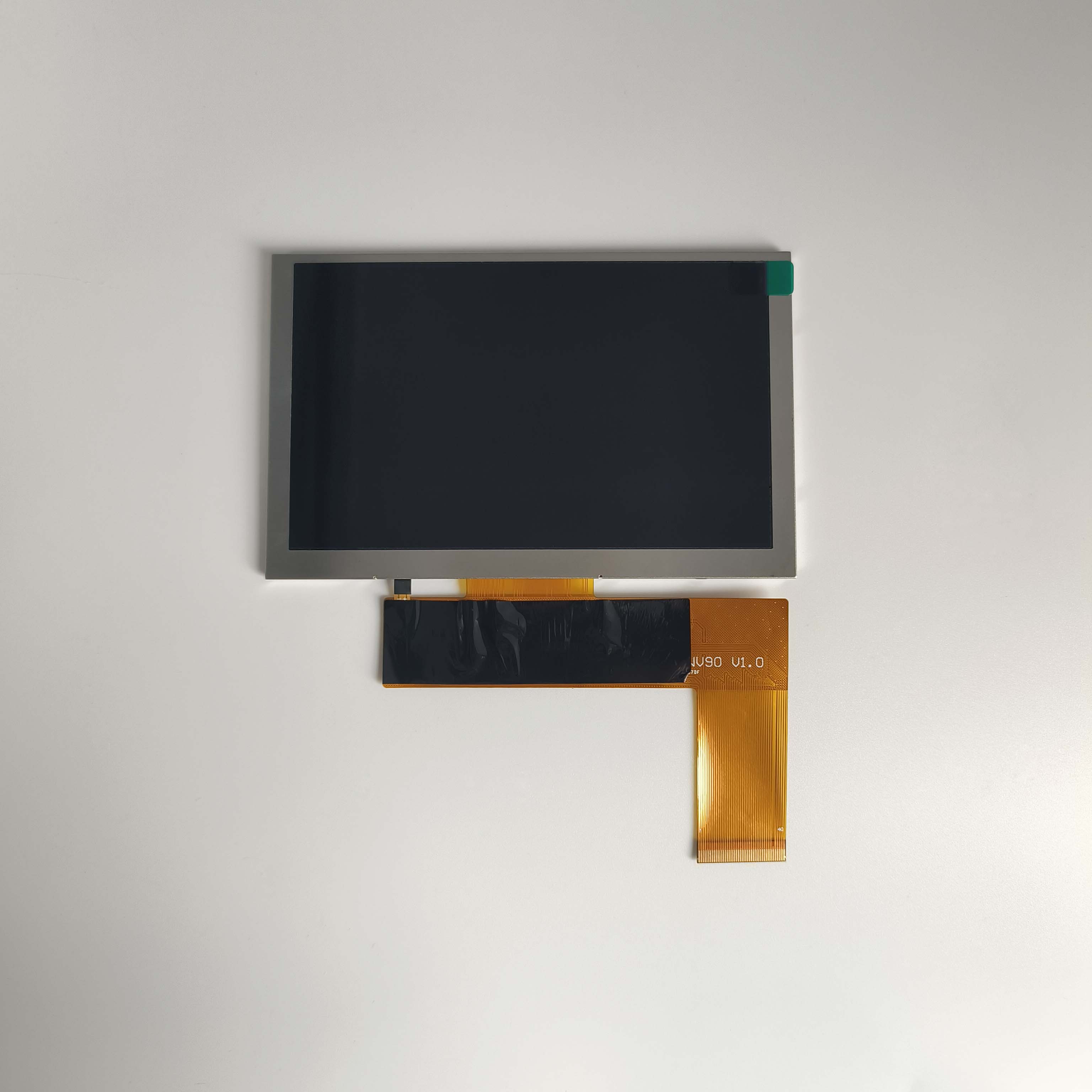
Yes—positively. OCA bonding eliminates the air gap that causes parallax error and false touches due to layer flexing under vibration. Capacitive touch readings remain stable even during constant motion. CDTech’s automated bonding ensures ±0.05 mm adhesive thickness across large displays (up to 12.3” in current vehicle lines, such as the S123BWU11EP). With over 13 years of TFT LCD manufacturing, CDTech delivers integrated designs that maximize touch sensitivity while reducing glare.
Conclusion
As 2026 autonomous cockpits demand glare‑free, structurally robust displays that can endure constant vibration, OCA optical bonding emerges as the preferred technology over LOCA or air‑gap methods. CDTech’s combined advantages—13+ years of display manufacturing, quad certifications (IATF16949, ISO13485, ISO9001, ISO14001), a 10,000㎡ factory with thousand‑level dust‑free workshop, and a proven zero‑defect quality policy—make it a trusted partner for automotive OEMs seeking high‑integrity bonded touch displays. Engineers should evaluate bonding partners not only on adhesive type but on process control, certification depth, and in‑house automation that ensure consistent glare reduction and structural reliability.
FAQs
Is OCA optical bonding repairable if a display fails?
No – OCA bonding creates a permanent laminate. However, the zero‑defect process (IATF16949 certified) drastically reduces field failure rates. For cockpit displays, durability outweighs repairability.
Can OCA bonding be applied to curved cockpit displays?
Yes, with advanced automation. CDTech’s fully automatic equipment (2024 upgrade) supports bonding on 2D and 2.5D cover glass. Full 3D curvature remains challenging but is feasible with custom OCA films.
How does OCA bonding perform under extreme temperature cycles in vehicles?
OCA films are formulated for automotive temperature range (-40°C to +85°C). CDTech tests bonded modules for 200+ thermal cycles with no delamination or bubble formation, exceeding AEC‑Q100 requirements.
Does OCA bonding reduce the brightness of the display?
Minimally – typically <1% transmission loss. In contrast, air‑gap displays suffer 10–15% brightness reduction due to reflections. OCA actually improves effective sunlight readability.
What is the lead time for a custom OCA‑bonded cockpit display?
Typical engineering samples take 4–6 weeks, with mass production tooling 10–12 weeks. CDTech’s in‑house bonding speeds up prototyping compared to outsourced alternatives.