GTFS real-time LCD displays integrate GPS data feeds via LVDS and MIPI interfaces on high-brightness IPS panels (850–1000 nits) for sunlight-readable bus route visualization. CDTech's IATF16949-certified, wide-temperature (-30°C to +85°C) solutions with in-house OCA optical bonding ensure zero-defect 24/7 uptime in transit environments. Custom prototypes deliver in four weeks for seamless GPS GTFS integration.
Check: How Do Bar LCDs Enhance Real-Time Updates in Train and Bus Passenger Information Systems?
What Is GTFS Real Time LCD and Why Use It for Transit Screens?
GTFS (General Transit Feed Specification) is a standardized protocol that enables real-time public transit data—including bus locations, arrival times, and route information—to be transmitted and displayed dynamically on LCD screens. When integrated into transit displays, GTFS real-time LCD systems pull live GPS coordinates from vehicle trackers and render accurate ETAs (estimated time of arrivals) on passenger-facing screens at bus stops and within vehicles. This reduces passenger wait time uncertainty, enhances the rider experience, and improves operational transparency for transit agencies. CDTech, with 13+ years of expertise in TFT LCD manufacturing for industrial and automotive applications, brings the same reliability principles to transit display solutions.
How Does GPS Data Feed Integration Work in GTFS Displays?
GPS data integration operates through a multi-layer pipeline: vehicle trackers continuously transmit GPS coordinates to centralized GTFS servers; display software queries these servers via APIs at regular intervals; the application parses JSON or Protocol Buffer feeds and renders route maps, vehicle positions, and ETA counters onto embedded LCD modules using drivers compatible with LVDS, RGB, or MIPI interfaces. CDTech's custom LCM designs support low-latency data visualization through direct UART/HDMI connectivity, allowing transit operators to push GTFS feeds with minimal processing overhead. The embedded display controller handles real-time refreshes, ensuring passengers always see current vehicle positions without screen lag or data loss.
| Interface Type | Bandwidth | Power Draw | Transit Suitability | CDTech Models |
|---|
| LVDS | Up to 1.92 Gbps | Low (2–3W) | Excellent for vehicle/outdoor | S123BWU11EP, S050HWV29ES |
| MIPI DSI | Up to 4.5 Gbps | Moderate (3–5W) | High-res portrait screens | S070QWU144NN-1 |
| RGB (Parallel) | Up to 600 Mbps | Moderate (4–6W) | Smaller displays, simplicity | S024HQ42EN, S035HQ55ES |
Which GTFS Real Time LCD Features Are Essential for Bus Route Displays?
Critical features for GTFS transit displays include high-brightness IPS panels (850–1000 nits minimum) to combat sunlight glare at outdoor bus stops, wide viewing angles (IPS technology ensures legibility from multiple directions), and OCA optical bonding to eliminate air gaps and reduce reflections. Wide-temperature operation (-30°C to +85°C) accommodates climates ranging from arctic winters to desert summers. IATF16949 certification—CDTech's automotive-grade standard—guarantees zero-defect manufacturing, ensuring 24/7 uptime critical for transit operations. Anti-glare (AG) and anti-fingerprint (AF) treatments further enhance readability and durability in high-traffic environments.
Check: BAR Type LCD Display
What Are the Best Hardware Solutions for Bus Stop LCD Displays?
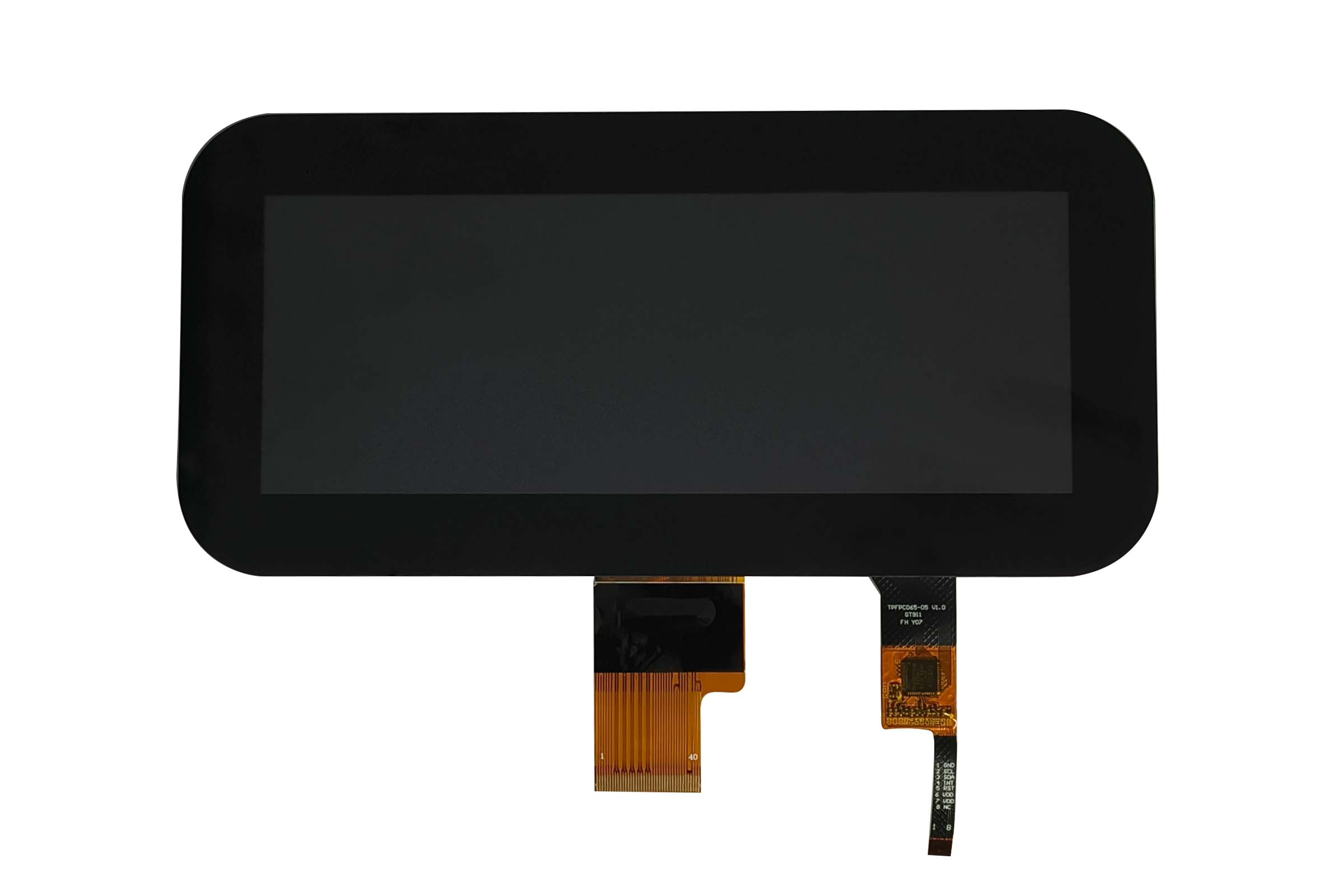
Bar-type and square IPS LCD panels in the 8.8" to 12.3" range excel for bus stop deployments. CDTech's S088AWX22EB-DC08 (8.8" BAR LCD, 1280×320, 1000 nits, PCAP 10-point multi-touch) suits dynamic route maps and interactive passenger queries. The S123BWU11EP (12.3" vehicle LCD, 1920×720, 950 nits, LVDS interface) scales for comprehensive network visualization. For outdoor installations, specify OCA optical bonding, IP65-rated enclosures, and wide-temperature (-30°C to +85°C) rated models. CDTech's quad certifications (ISO9001, ISO14001, ISO13485, IATF16949) and 10,000 square-meter factory with 3,500 square-meter dust-free workshop enable rapid custom prototyping and field-proven reliability for transit OEMs across Europe, the Americas, and Asia.
How to Choose Industrial LCD for Transit with GTFS Data Visualization?
Evaluate displays using three criteria: brightness (minimum 800 nits for outdoor, 500 nits for sheltered stops), temperature range compliance with your deployment region, and interface compatibility with your GTFS software stack. Certification status matters—IATF16949 and ISO13485 ensure automotive-grade reliability; ISO9001 and ISO14001 signal quality management and environmental responsibility. Consider power efficiency for battery-backed bus dashboard installations and custom size/resolution to match your UI design. CDTech's 13+ years in TFT LCD manufacturing and exports to Japan, Russia, and Taiwan demonstrate proven expertise in transit-grade deployments worldwide.
| Specification | GTFS Transit LCD | Standard Industrial LCD | CDTech Example |
|---|
| Brightness (nits) | 850–1000 | 500–800 | S088AWX22EB-DC08 (1000) |
| Temp Range | -30°C to +85°C | -20°C to +70°C | S123BWU11EP (-30°C to +80°C) |
| Certifications | IATF16949 + ISO13485 | ISO9001 only | IATF16949 + ISO13485 + ISO9001 + ISO14001 |
| OCA Bonding | Standard option | Optional add-on | In-house capability |
Why Does CDTech Excel in Custom GPS GTFS Integration Displays?
CDTech combines in-house design, manufacturing, and integration capabilities unavailable from generic LCD suppliers. The company's 3,500+ square-meter thousand-level dust-free workshop ensures zero-defect production; IATF16949 automotive certification guarantees reliability for transit-critical applications. Since 2020, CDTech has operated a dedicated touch panel workshop supporting PCAP and CTP assembly; in-house OCA optical bonding (critical for sunlight-readable GTFS screens) reduces lead times and cost. The firm's fully automatic POL/LCD/CTP equipment (upgraded in 2024) enables rapid prototyping: custom GTFS display solutions prototype in four weeks. With 10+ years of R&D investment and National High-tech Enterprise recognition, CDTech delivers GPS GTFS integration displays engineered for 24/7 transit operations.
CDTech Expert Views
"Our in-house OCA bonding, LVDS/MIPI interface expertise, and automotive-grade IATF16949 certification cut GTFS display integration time by 50% compared to standard industrial suppliers. Transit OEMs benefit from our National High-tech Enterprise status and proven track record deploying zero-defect vehicle LCDs across Europe, the Americas, and Asia. For real-time GPS data visualization on outdoor bus stops, our high-brightness IPS panels (850–1000 nits) with wide-temperature (-30°C to +85°C) operation eliminate field failures. We commit to four-week custom prototyping and 24-hour response times—critical for time-sensitive transit network rollouts."
— CDTech Engineering Team, Shenzhen CDTech Electronics
What Are Real-World Applications of Vehicle LCD GTFS Screens?
Bus stop real-time displays showing live route maps, vehicle positions, and dynamic ETA countdowns represent the primary deployment. In-vehicle dashboard HMIs powered by CDTech's 10.1" or 12.3" LCD panels with LVDS/PCAP interfaces display GPS-fed navigation and passenger alerts. Smart city transit networks leverage CDTech's custom bar-type displays (1920×720 or 1280×320 resolutions) to present compressed route summaries on stretched screens. Integration with open-source GTFS tools (e.g., GTFS-rt protobuf feeds) on CDTech's embedded LCMs enables low-cost deployment for municipal transit agencies. Future scalability is built in: CDTech's modular MIPI and RGB interface support scales from small kiosk displays to large-format transit hubs, future-proofing smart city infrastructure.
Conclusion
Integrating GTFS real-time data into LCD transit displays requires hardware engineered for sunlight readability, thermal extremes, and 24/7 uptime. CDTech's 13+ years of TFT LCD expertise, IATF16949 automotive certification, in-house OCA bonding, and zero-defect quality policy position the company as the premier choice for GPS GTFS integration displays. From bar-type bus stop screens to in-vehicle dashboard HMIs, CDTech's custom LCM solutions deliver four-week prototypes with proven reliability across global transit networks. Empower your transit operations with zero-downtime GTFS displays engineered for mission-critical performance.
FAQs
What interfaces support GPS GTFS integration on GTFS real-time LCD displays?
LVDS, MIPI DSI, RGB (parallel), and HDMI interfaces all support direct GTFS data feeds on CDTech panels. LVDS dominates vehicle and outdoor applications due to low power draw (2–3W) and high bandwidth (up to 1.92 Gbps); MIPI DSI suits high-resolution portrait screens; RGB excels for smaller displays and simplicity. UART and USB protocols also enable integration for embedded systems requiring lower-level control.
Can CDTech customize GTFS data visualization screens for outdoor bus stops?
Yes. CDTech offers OCA optical bonding, 850–1000 nits brightness, and wide-temperature operation (-30°C to +85°C) specifically for outdoor transit environments. IATF16949 and ISO13485 certifications ensure zero-defect reliability. Anti-glare (AG) and anti-fingerprint (AF) treatments enhance readability and durability in high-traffic bus stop installations.
How long does CDTech require to deliver GTFS real-time LCD prototypes?
Four weeks from the 10,000 square-meter factory, including custom design, OCA/touch integration, and GPS GTFS compatibility testing. CDTech commits to 24-hour response times for quotes and technical inquiries, ensuring rapid deployment schedules for time-sensitive transit network rollouts.
Are CDTech displays certified for vehicle LCD GTFS applications?
Fully certified: IATF16949 (automotive-grade), ISO13485 (medical-grade), ISO9001 (quality management), and ISO14001 (environmental). These certifications guarantee zero-defect manufacturing and reliability for mission-critical transit and vehicle applications requiring 24/7 uptime.
Where can I purchase industrial LCD displays for transit with GTFS support?
Contact CDTech directly: sales@cdtech-lcd.com, phone +86-0755-23032202, or WhatsApp +86-13556818296. Visit the website at https://www.cdtech-lcd.com. CDTech exports worldwide to Europe, the Americas, Middle East, Russia, Japan, and Taiwan. Request custom quotes for your specific GTFS display requirements and bus stop dimensions.