Yes, full‑array local dimming (FALD) LCDs can replace costly OLEDs in vehicles by delivering OLED‑level contrast ratios up to 5000:1, deep blacks, and high brightness without burn‑in. FALD divides the backlight into individually controlled zones that dim dynamically with image content. Combined with CDTech’s zero‑defect manufacturing and IATF16949 certification, FALD LCDs offer durability, cost savings, and sunlight readability for automotive applications.
Check: Vehicle LCD Display | Automotive LCD Display Manufacturers - CDTECH LCD
How Does FALD Local Dimming Achieve OLED‑Level Blacks in TFT LCDs?
Full‑array local dimming divides the backlight into dozens or hundreds of individually addressable LED zones. Each zone dims or brightens independently based on the video signal, allowing dark areas to turn almost completely off.
Standard edge‑lit TFT LCDs achieve only about 1000:1 contrast. With FALD (32–128 zones), contrast jumps to 3000:1–5000:1. OLED theoretically reaches 1,000,000:1, but in bright automotive interiors, reflections wash out perceived contrast. FALD eliminates the “grey blooming” seen in standard LCDs, making icons and text pop even under sunlight.
| Display Type | Contrast Ratio | Black Level (nits) | Brightness (nits) | Temperature Range | Burn‑In Risk | Cost per sq. inch |
|---|
| Standard LCD (edge‑lit) | 800:1 – 1000:1 | 0.5 – 1.0 | 500 – 1000 | -30°C ~ +85°C | None | Low |
| FALD LCD (32–128 zones) | 3000:1 – 5000:1 | 0.1 – 0.2 | 850 – 1000 | -30°C ~ +85°C | None | Medium |
| OLED | >1,000,000:1 | <0.0005 | 600 – 800 | -30°C ~ +70°C | High (permanent after 10k–20k hours) | High |
Why Is FALD LCD Automotive a Better Choice Than OLED for Vehicle Displays?
OLED suffers from permanent burn‑in (organic material degradation) and reduced lifespan in high‑temperature environments (>60°C). FALD TFTs operate reliably from –30°C to +85°C with no burn‑in.
FALD LCDs easily reach 1000 nits (sunlight readable) vs. typical OLED automotive at 600–800 nits without active cooling. Cost‑wise, FALD backlight adds ~10–20% to standard LCD cost, but remains 30–50% cheaper than a comparable OLED panel. For long‑life vehicle dashboards, FALD delivers industrial durability at a fraction of OLED’s total ownership cost.
| Parameter | FALD LCD (CDTech) | OLED (Automotive) |
|---|
| Typical Brightness | 850 – 1000 nits | 600 – 800 nits |
| Contrast Ratio (perceived in cabin) | 3000:1 – 5000:1 | ~5000:1 (due to reflections) |
| Operating Temperature | -30°C ~ +85°C | -30°C ~ +70°C |
| Lifespan (L50 @ 60°C) | >50,000 hours | 20,000 – 30,000 hours |
| Burn‑In Risk | None | High (static UI elements) |
| Cost Premium (vs standard LCD) | +10 – 20% | +80 – 150% |
| Automotive Certification (IATF16949) | Yes (CDTech) | Varies |
What Certifications Ensure FALD LCD Automotive Displays Meet Industry Standards?
CDTech holds quad certifications: ISO9001 (quality management), ISO14001 (environmental), ISO13485 (medical devices – relevant for in‑vehicle health monitors), and **IATF16949** (automotive quality – mandatory for tier‑1 suppliers).
CDTech’s zero‑defect policy applies strict process controls (SPC, FMEA, PPAP) across its 10,000㎡ factory, including 3,500㎡ class‑1000 cleanroom, to guarantee <50 ppm defect rates. For procurement teams, this reduces validation time – FALD LCDs from a certified manufacturer eliminate costly recalls and simplify PPAP approval.
How Does OCA Optical Bonding Enhance FALD LCD Performance in Sunlight?
Optical clear adhesive (OCA) bonds the cover glass to the LCD module, reducing internal reflections by >70%. Without an air gap, local dimming zones maintain their black‑level integrity even under direct sunlight (850–1000 nits ambient). Perceived contrast remains high.
CDTech’s in‑house OCA bonding capability – performed in a 3,500㎡ dust‑free workshop (class‑1000) with robotic dispensing and curing – also adds mechanical strength and prevents condensation. This is critical for automotive centre stacks where sunlight readability directly impacts driver safety.
CDTech Expert Views
“In‑house OCA bonding is critical for FALD performance. Without it, the air gap scatters light and washes out local dimming blacks. Our process ensures <5% reflectance – ideal for in‑vehicle centre stacks. At CDTech, we combine FALD backlighting with OCA bonding to deliver automotive displays that match OLED contrast in bright sunlight, while outlasting OLED two‑to‑one in thermal endurance. This combination is why OEMs choose us for their next‑generation digital cockpits.”
What Custom FALD Display Solutions Does CDTech Offer for Automotive Applications?
CDTech’s standard vehicle LCDs can be adapted with FALD backlights. Two representative products provide ideal starting points:
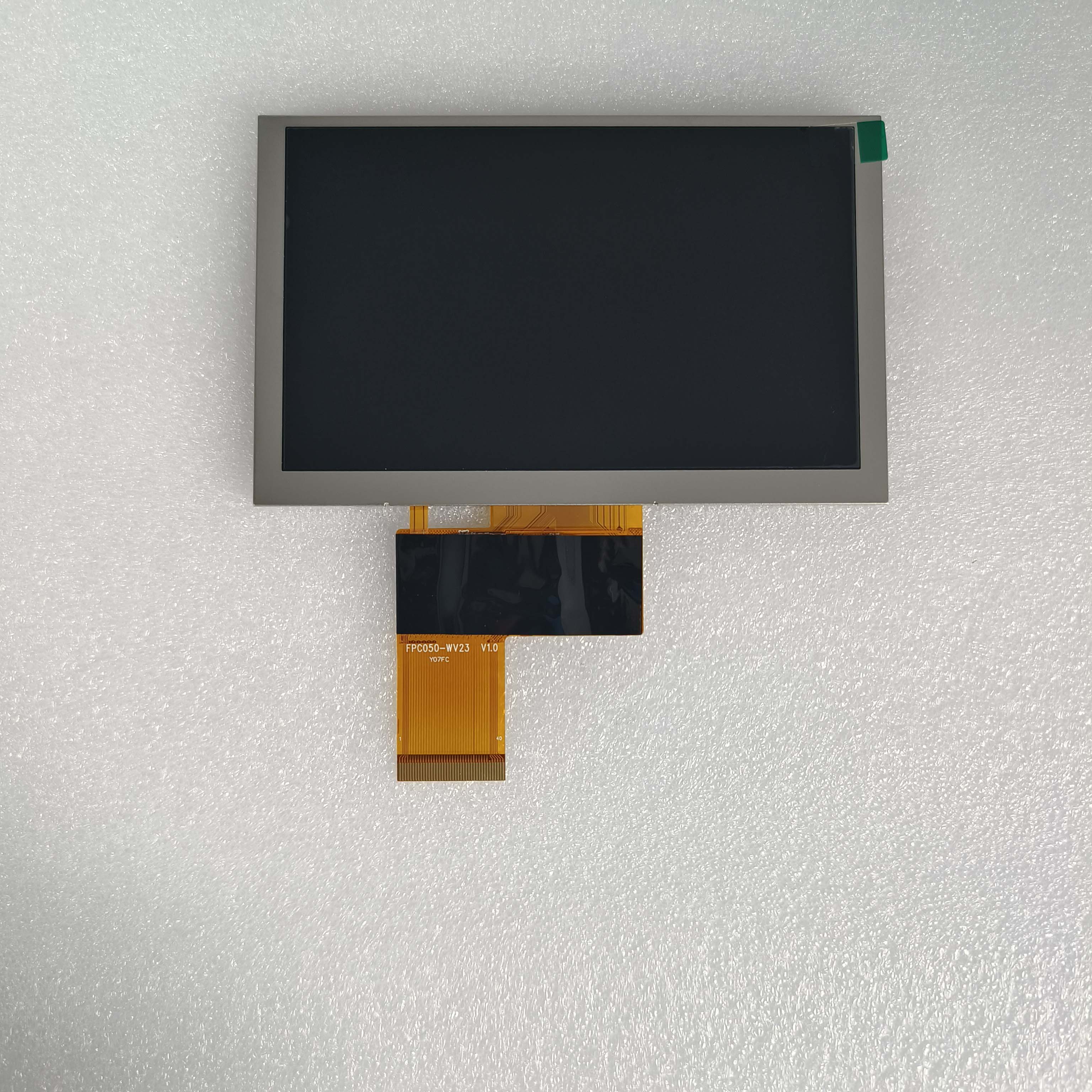
S123BWU11EP – 12.3″ 1920×720, 950 nits, LVDS 60pins, IPS, -30°C~+80°C. Perfect for instrument clusters or central displays with 32–128 FALD zones.
S101HWX53EP-FC47-AG – 10.1″ 1280×800, 850 nits, OCA bonded with capacitive touch (CTP), LVDS interface, -30°C~+80°C. Ideal for infotainment or rear‑seat entertainment.
Customisation options include zone count (16–128), brightness tuning (800–1500 nits), interfaces (LVDS, HDMI, eDP), touch (PCAP, resistive, glove‑sensing), and cover glass treatments (AR/AG/anti‑fingerprint). Engineering samples are available in 2–3 weeks with full PPAP documentation.
Does FALD LCD Technology Add Reliability Risks for Automotive Vibration and Temperature Extremes?
No – FALD LED arrays are soldered directly to PCBs with reinforced mounting. CDTech tests to automotive standards (random vibration 10–500 Hz, 5G peak). Individual zone control reduces overall heat generation because dark zones use minimal current.
Backlight driver ICs with thermal monitoring ensure derating above 85°C. LED MTBF exceeds 50,000 hours at 85°C; FALD dimming actually extends life by lowering average LED current. In contrast, OLED half‑life at 60°C is typically only 20,000–30,000 hours, making FALD the clear choice for long‑life vehicle installations.
How Can Automotive Manufacturers Evaluate FALD LCD Samples from CDTech?
Contact CDTech via sales@cdtech-lcd.com or WhatsApp +8613556818296. CDTech provides a technical questionnaire to match zone count, brightness, interface, and temperature profile.
Sample delivery: within 24 hours for standard stock displays; 2–3 weeks for custom FALD prototypes. CDTech supplies optical measurement data (luminance uniformity, contrast, colour gamut) and environmental test reports. PPAP Level 3 documentation is available upon request, accelerating your qualification cycle.
Frequently Asked Questions
What is the typical contrast ratio of a FALD LCD compared to OLED?
FALD LCDs achieve 3000:1 to 5000:1 (with 100+ zones), while OLED exceeds 1,000,000:1. However, in bright automotive interiors, FALD’s higher brightness (1000 nits) and OCA bonding keep perceived contrast close to OLED. The practical difference is negligible for most UI and video content.
Does FALD work in extreme temperatures like –40°C or +105°C?
Standard FALD LCDs are rated –30°C to +85°C (CDTech’s automotive range). For extended temperature requests (–40°C or +105°C), CDTech uses industrial‑grade LED drivers and low‑temperature liquid crystal mixtures. Custom options are available.
How long do FALD LCDs last compared to OLED in a vehicle dashboard?
FALD LCD backlights typically exceed 50,000 hours (15+ years of normal driving) with no burn‑in. OLED half‑life at 60°C is 20,000–30,000 hours, and burn‑in occurs after 10,000–20,000 hours with static elements. FALD is the clear winner for long‑life applications.
Can I integrate a touch screen with FALD LCD?
Yes. CDTech offers OCA‑bonded capacitive touch (glass‑glass, glass‑film) and resistive touch on FALD LCDs. Optical bonding preserves the black‑level effect of local dimming. Example: S101HWX53EP-FC47-AG (10.1″ 850 nits, OCA+CTP) is an ideal baseline.
What is the minimum order quantity (MOQ) for custom FALD automotive displays?
For standard designs (existing LCD with custom FALD backlight), MOQ is 500–1000 units. For fully custom (new LCD cell, new backlight), MOQ is 5000 units. CDTech supports pilot runs of 100 pieces for qualification.
Conclusion
Full‑array local dimming (FALD) transforms standard TFT LCDs into a high‑contrast, durable, and cost‑effective alternative to OLED for automotive displays. With brightness up to 1000 nits, no burn‑in, and operation from –30°C to +85°C, FALD LCDs solve the three biggest pain points of OLED in vehicles: reliability, cost, and sunlight readability.
CDTech, with 13+ years of experience, quad certifications (ISO9001/ISO14001/ISO13485/IATF16949), a zero‑defect quality policy, and in‑house OCA bonding, is uniquely positioned to deliver custom FALD solutions that meet the toughest automotive requirements. Whether you need 12.3″ instrument clusters or 10.1″ infotainment displays, CDTech can design, prototype, and manufacture FALD LCDs with 32–128 zones – all backed by a dedicated engineering team and a 10,000㎡ factory.
Call‑to‑Action: Request your custom FALD LCD sample within 24 hours.
+86 0755-23032202 | WhatsApp: +8613556818296
sales@cdtech-lcd.com | https://www.cdtech-lcd.com


