As industrial equipment continues to become smarter and more connected, the
display has evolved from a simple output device into an essential part of the
user experience. Whether it is used to monitor machine status, display operating
parameters, provide navigation, or support human-machine interaction, the
display directly influences both usability and product appearance.
Among the many display formats available today, BAR Type LCD displays have
gained increasing attention because of their unique ultra-wide design. Unlike
conventional rectangular screens, BAR displays are specifically designed for
products with limited installation space or interfaces that require information
to be presented in a long, narrow layout. They are now widely used in industrial
automation, transportation, medical equipment, retail systems, and smart
devices.
For equipment manufacturers, selecting a BAR Type LCD display involves much
more than choosing the right dimensions. Factors such as brightness, display
technology, interface compatibility, operating environment, customization
capabilities, and long-term product availability all have a significant impact
on the success of a project. This guide explains the most important
considerations to help manufacturers choose a display solution that delivers
reliable performance throughout the entire product lifecycle.
Why BAR Type LCD Displays Are Becoming More Popular in Industrial
Equipment
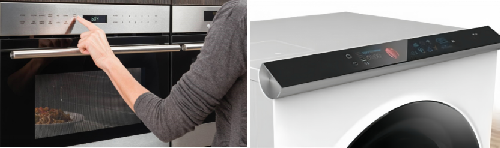
A BAR Type LCD display is a TFT LCD module designed with an elongated
aspect ratio, allowing it to fit into narrow spaces where traditional displays
would either waste valuable installation area or require major design changes.
Depending on the application, these displays may be produced in various custom
dimensions and resolutions while maintaining excellent image quality and
readability.
The growing popularity of BAR LCD displays is closely related to the
changing design trends of modern equipment. Manufacturers are increasingly
looking for products that combine compact structures with intuitive user
interfaces. Instead of squeezing a conventional display into a narrow control
panel, designers can install a display that naturally matches the available
space, resulting in a cleaner and more professional appearance.
Efficient use of installation space is one of the biggest advantages of BAR
displays. Equipment such as vending machines, coffee machines, industrial
controllers, elevators, digital signage, and smart lockers often have long but
narrow front panels. An ultra-wide display allows these products to present more
information without increasing the size of the equipment.
Another important benefit is improved information presentation. Machine
status, production data, alarm messages, operating parameters, navigation
information, or advertising content can all be displayed in a clear horizontal
or vertical layout. Users spend less time navigating through multiple screens,
improving both efficiency and the overall operating experience.
BAR Type LCD displays also contribute to modern product design. As
industrial equipment becomes more sophisticated, customers increasingly expect
products to look as advanced as they perform. Slim displays with narrow bezels
help manufacturers create interfaces that appear cleaner, more contemporary, and
easier to operate.
Key Specifications to Evaluate Before Choosing a BAR Type LCD Display
Choosing the right BAR Type LCD display requires balancing performance,
reliability, and cost. Rather than focusing on a single specification,
manufacturers should evaluate the complete display solution based on the
intended application.
Display size and resolution should always be determined by the available
installation space and the type of information being displayed. Smaller
industrial control panels may only require compact displays with moderate
resolutions, while transportation systems, medical equipment, or retail
advertising often benefit from larger displays with higher pixel density.
Selecting an unnecessarily high resolution may increase hardware requirements,
while insufficient resolution can reduce readability and the overall user
experience.
Brightness is another critical factor. Indoor industrial equipment
generally performs well with brightness levels between 300 and 500 nits, whereas
equipment installed in brightly lit factories or commercial environments may
require 700 to 1,000 nits. Outdoor applications often demand even higher
brightness combined with anti-glare treatments or optical bonding to maintain
visibility under direct sunlight. Matching brightness to the operating
environment not only improves readability but also helps optimize power
consumption.
Viewing angle should not be overlooked, especially when equipment is
operated from different positions. Displays based on IPS technology provide
wider viewing angles and more consistent color performance than traditional TN
panels, allowing operators to clearly read information from multiple directions
without significant color distortion or contrast loss.
For equipment requiring user interaction, touch technology becomes another
important consideration. Projected capacitive touch panels are widely used
because they provide smooth operation, support multi-touch gestures, and offer
excellent optical performance. In certain industrial environments where
operators wear thick gloves or where cost is a primary concern, resistive touch
screens may still be the better option. The appropriate touch solution depends
on the actual operating conditions rather than simply choosing the latest
technology.
Manufacturers should also verify interface compatibility before selecting a
display. Common interfaces such as RGB, LVDS, MIPI DSI, HDMI, eDP, and SPI each
have different bandwidth, wiring, and hardware requirements. Choosing a display
that integrates easily with the existing processor platform can significantly
reduce software development time and simplify system integration.
The operating environment has an equally important influence on display
reliability. Standard commercial displays are suitable for office environments,
but industrial equipment often experiences much wider temperature variations.
Applications in manufacturing facilities, transportation, or outdoor
installations typically require industrial-grade LCD modules capable of stable
operation across extended temperature ranges. Dust, humidity, vibration, and
continuous operation should also be considered during product selection.
Finally, manufacturers should pay attention to optical bonding and
backlight lifetime. Optical bonding minimizes reflections by eliminating the air
gap between the LCD panel and protective glass, resulting in improved
visibility, greater impact resistance, and better protection against moisture
and dust. Meanwhile, the quality of the LED backlight directly affects long-term
brightness stability. Since industrial equipment often operates continuously for
many years, selecting a display with a long backlight lifespan can significantly
reduce maintenance costs and improve product reliability.
Why Supplier Selection Is Just as Important as Product Specifications
Even the highest-quality display cannot guarantee long-term success if the
supplier is unable to provide consistent support throughout the equipment's
lifecycle. Unlike consumer electronics, industrial equipment often remains in
production for five to ten years or even longer. During this period,
manufacturers need stable component availability to avoid costly redesigns
caused by discontinued display models.
A reliable supplier should offer clear lifecycle management policies,
advance end-of-life notifications, and compatible replacement solutions whenever
component changes become necessary. This level of supply stability is especially
important for equipment manufacturers producing low- to medium-volume industrial
products over many years.
Customization capabilities are another key advantage when working with an
experienced BAR Type LCD manufacturer. Many projects require more than a
standard display module. Depending on the application, manufacturers may need
customized dimensions, higher brightness, touch screen integration, optical
bonding, protective cover glass, waterproof structures, wider operating
temperature ranges, or specialized interface configurations. Partnering with a
supplier that provides engineering support during product development can reduce
design complexity and accelerate time to market.
Beyond manufacturing capabilities, technical support should also be
considered during supplier evaluation. Before placing an order, equipment
manufacturers should discuss sampling procedures, quality certifications,
warranty policies, customization options, technical documentation, and long-term
supply commitments. A supplier that actively supports design integration often
becomes a valuable long-term development partner rather than simply a component
vendor.
Typical Applications of BAR Type LCD Displays
The flexibility of BAR Type LCD displays has led to their widespread
adoption across numerous industries.
In industrial automation, they are commonly integrated into machine control
panels, production monitoring systems, and human-machine interfaces where
operators need to monitor equipment status, production parameters, or alarm
information at a glance.
Within the transportation industry, BAR displays are used in railway
stations, airports, buses, subways, and passenger information systems. Their
elongated format makes them particularly suitable for displaying schedules,
navigation information, and route guidance in confined spaces.
The retail and commercial sectors have also embraced BAR displays for
digital shelf labels, advertising screens, vending machines, self-service
kiosks, and point-of-sale systems. Their unique shape attracts attention while
maximizing available installation space.
In medical equipment, BAR Type LCD displays are used in patient monitoring
systems, laboratory instruments, and diagnostic equipment, where clear
visualization of operating data is essential. Meanwhile, smart building
applications, including elevator panels, access control systems, and building
automation devices, benefit from their compact dimensions and clean
appearance.
As equipment designs continue to prioritize both functionality and
aesthetics, the range of applications for BAR Type LCD displays is expected to
expand even further.
Common Purchasing Mistakes to Avoid
When selecting a BAR Type LCD display, many manufacturers focus primarily
on the initial purchase price while overlooking factors that have a much greater
impact on long-term ownership costs.
One common mistake is choosing a display with insufficient brightness, only
to discover that it becomes difficult to read in the actual installation
environment. Others select a display without confirming interface compatibility,
leading to unnecessary hardware modifications during system integration.
Ignoring operating temperature requirements can also reduce reliability in
demanding industrial environments.
Another frequent issue is overlooking the supplier's product lifecycle
policy. A low-cost display that becomes unavailable after only a few years may
force an expensive product redesign, making the initial savings insignificant.
Similarly, failing to evaluate customization capabilities and technical support
may create additional engineering challenges during product development.
By considering both technical performance and long-term supplier
reliability, manufacturers can avoid these common pitfalls and build products
that remain dependable throughout their service life.

Conclusion
Selecting the right BAR Type LCD display is about far more than finding a
screen with the correct dimensions. The ideal solution should balance image
quality, brightness, viewing performance, interface compatibility, environmental
durability, and long-term reliability while fitting seamlessly into the overall
equipment design.
At the same time, choosing the right supplier is equally important. A
manufacturer with strong engineering expertise, customization capabilities, and
stable production capacity can help reduce development risks, simplify system
integration, and ensure reliable component availability throughout the product
lifecycle.
As demand for compact, intelligent, and visually appealing equipment
continues to grow, BAR Type LCD displays are becoming an increasingly valuable
solution across a wide range of industrial applications. By carefully evaluating
both the technical specifications and the supplier behind the product, equipment
manufacturers can make informed purchasing decisions that support long-term
product performance and customer satisfaction.
FAQ
What is a BAR Type LCD display?
A BAR Type LCD display is an ultra-wide TFT LCD module with an elongated
aspect ratio, designed for applications where traditional rectangular displays
cannot efficiently utilize the available installation space.
What industries commonly use BAR Type LCD displays?
These displays are widely used in industrial automation, transportation
systems, medical equipment, retail displays, smart buildings, vending machines,
self-service kiosks, and digital signage.
How do I choose the right brightness for my application?
Brightness should match the installation environment. Indoor equipment
typically requires 300–500 nits, while outdoor or high-ambient-light
applications often need 1,000 nits or more, along with anti-glare treatments or
optical bonding.
Why is long-term supply important for industrial equipment?
Industrial products often remain in production for many years. Choosing a
supplier that offers long product lifecycles and reliable replacement support
helps avoid costly redesigns caused by discontinued display models.
Can BAR Type LCD displays be customized?
Yes. Many manufacturers offer customization services, including display
size, resolution, touch integration, cover glass, optical bonding, brightness,
interface options, operating temperature range, and other features to meet
specific project requirements.